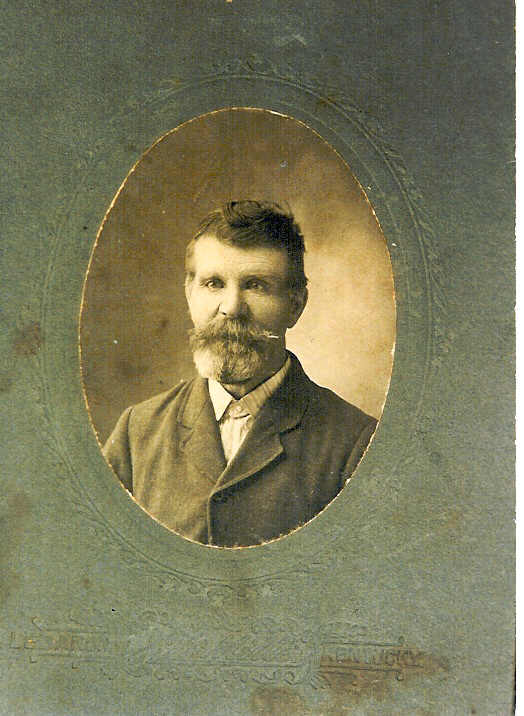
from Book of Biographies – Grafton County, New Hampshire
Samuel P. Carbee, M.D., the subject of this brief notice, first saw the light of day on the old Carbee homestead in the town of Bath, June 14, 1836; he is a son of John H. and Annie (Powers) Carbee, and a grandson on the paternal side of Joel and Lois (Downer) Carbee. Joel Carbee was born before the Revolutionary War, in which he took part as a soldier. In reward for his services in behalf of his country he never received a pension, for he died before the day of granting pensions, but his widow, who survived him a long time, was granted one, and she enjoyed the benefits accruing from it until her death. Joel Carbee was a very powerful man, large, muscular, and fine-looking; his striking physical characteristics were inherited by all of his sons, and may be seen in his grandsons. Old Dr. McNabb relates that Mr. Carbee and a man named Wallace while at work together at the same job had a little falling out, arising from a difference of opinion. Accordingly they resorted to the old and ever popular method to those of British extraction of settling disputes, by fisticuffs. Leaving the rest of the workmen, they retired to a secluded spot, and there satisfaction was given and taken. Upon their return the only circumstance either in their actions or in their appearances that pointed to the probable outcome of the affray was Wallace’s standing treat. Such little disputes settled in so amicable and quiet way made them better friends than ever. The Downer family, into whom Mr. Carbee married, were Newbury folks, of whom few are left today, for there were few, if any, sons, and several of the daughters died unmarried. To Joel Carbee and his wife were born seven children, all boys but one: John H., Joel, Moses, William, Andrew, Henry, and Sallie. John H. Carbee was born in the village of Newbury, Vermont, June 1, 1791, and died in the town of Bath, June 25, 1877, where he had resided ever since his marriage. He was reared in his native place, and there attended the primitive schools; his education was for the most part self-acquired in the school of experience. On his removal to Bath he took a very prominent part in the public affairs of that place. He was chosen the representative for some eight or ten times; was also selectman for some dozen years. Masonic rites claimed him as a faithful devotee in his younger years; he became a Master Mason, and wielded quite a wide influence. Then came the Morgan incident, and with it the disruption of Masonic Orders for a long time; when the Order finally – recovered, Mr. Carbee was an old man with no further desire for Masonic advancement. He was a Whig in politics, and one of the first Republicans in his town. Brief in his utterances, his few remarks showed him to be a man of pronounced views, with a good foundation for his beliefs. During his life, in his early manhood, he was engaged in piloting boats down the river, returning with flatboats laden with provisions, which he poled up against the current. John H. Carbee’s wife, Annie Powers, was born near Wallacehill, Feb. 14, 1797, and died in Bath, Dec. 20, 1887. She was a daughter of Samuel Powers of Hollis, N. H., who was a farmer in his later years. He was educated for the ministry, but thinking himself unfitted for it, he induced his father to educate a younger brother instead, and allow him to go into business. He accordingly adopted the profession of a surveyor, and worked at it in connection with farming. It was the custom in those days to keep cider on draught throughout the year, and this old gentleman, Samuel Powers, always had a pitcher of the drink on the table at every meal. Twenty-five or thirty barrels were made every year, during the apple season, and everybody was expected to drink, and very few ever became intoxicated. He lived to be ninety-five years old, the last ten years of which were spent in blindness. He was a son of Peter Powers, who was a preacher of the Congregationalist faith, and the first preacher of the upper Connecticut Valley, coming into this section of the country in 1765. He was given by popular subscription as a living 200 acres of the finest river bottom land, and a yearly stipend of £35, six shillings, and thirty cords of wood, cut and corded each year. His preaching was not limited to the New Hampshire side of the river, but extended also over into Vermont, a boat providing means of communication. The Powers family was most probably of Scotch-Irish descent, coming from the north of Ireland. To the parents of Annie Powers were born two children: John and Annie. By a subsequent marriage the family was increased by the addition of one more child: Moody. The union of John H. Carbee and Annie Powers was blessed with the following offspring: Lois married Moses M. Kelsey of Derby, Vermont; Sallie was taken to a brighter world in infancy; John, died Oct. 25, 1893; William was killed at Champion Hills during the Civil War; his wife was Harriet Smith; Sarah died in 1880; Henry lives on the Carbee homestead in Bath; Milo makes his home in East Boston; Mary is the widow of John Morrill of Derby, Vermont; Samuel Powers is the subject of this sketch; and Ann, the widow of Edward Johnson, lives in Wareham, Mass. With the exception of the one, who died when a babe, all grew up; the first death was that of William, killed in the Battle of Champion Hills, near Vicksburg, May 19, 1863, when fighting under Gen. Grant. Samuel Powers Carbee was reared on the home farm, where all his brothers and sisters were born; he attended the common schools and the seminary at Newbury, Vermont. He remained at home until 1857, teaching school in the winter and working on the farm in the summer. In the summer of 1857 he was employed in a daguerreotype studio in Boston, and in the following winter taught another term of school. In the spring of 1858 he went west to Illinois, to Lacon, where he kept books for Fisher, Dean & Co., pork packers, working there from March to July. He then went to Linn Co., Iowa, to Springville, where he worked on his brothers’ farms for two years. Returning home at the expiration of that period, he studied medicine until the outbreak of the war, studying under Dr. Dixie Crosby and his son, Dr. Alpheus B. Crosby, and attending one course of lectures at Dartmouth College; the studying was continued summer and winter, teaching winter schools also. Aug. 21, 1862, Dr. Carbee broke off his medical studies and enlisted in Co. D., 12th N. H., Vol. Inf., and was mustered into the United States service Oct. 26, 1863, as a private, and later appointed assistant surgeon of the regiment, a position he held until the close of the war, June 21, 1865. The regiment disbanded at
Concord, July 3, 1865. Mr. Carbee saw service in the Army of the Potomac and in the Army of the James, in the State of Pennsylvania, Maryland, and Virginia. The following battles marked his connection with the army: Fredericksburg, Chancellorsville, Gettysburg, Bermuda Hundred, Drury’s Bluff, Ft. Harrison, Ft. Royal, Swift Creek, Cold Harbor, capture of Richmond, and siege of Petersburg. In the capture of Richmond, the Southern capital, Dr. Carbee, following close after the picket line, has the distinction of being the first surgeon of the Union Army to enter the city. At the battle of Gettysburg he was under fire, but was untouched with the exception of his hat, which was shot through. At the close of the war he went to Hanover, resumed his studies, and received his diploma, Nov. 3, 1865. Upon the Doctor’s admission to practice, he settled in Haverhill, and has been kept busy in attending to his large practice ever since. Dr. Carbee married, Sept. 30, 1885, N. Delia Buck of Haverhill, N. H., the third of six children, born to Lyman and Lucia W. (Kasson) Buck. Lyman Buck was a son of Lyman, Sr., and Mindwell (Dewey) Buck, originally from Waterford, Vermont. Lucia W. Kasson was a daughter of Marvin and Elizabeth (Dick) Kasson. Mrs. Dr. Carbee is a member of the Congregational Church. In politics, Dr. Carbee is a strong Republican; he was a member of the Legislature for two years, trustee of the academy, surgeon-general of the State on the staff of Gov. Charles A. Busiel. He was county commissioner for four years, having won in an election, that of 1884, when the county had been Democratic for twenty-five years. Our subject is a member of G. A. R., Nat. Westgate Post, No. 50. He is a Mason, belonging to Kane Lodge, of Lisbon, No. 64; Franklin Chapter of Lisbon, No. 9; Omega Council; and Mt. Horeb Commandery of Concord, N. H. No more representative or worthier gentleman could be found to head this collection of biographies and portraits of the leading citizens of Grafton Co. than Dr. Carbee, and it is with genuine pleasure we present his portrait on a preceding page.
Categories: Family Stories, Genealogy Ramblings